15 Best No-Code AI Tools to Build a Business in 2026
Non-technical entrepreneurs often watch developers build impressive AI applications while feeling locked out by coding barriers. This frustration grows when business opportunities slip away during lengthy searches for technical talent or budget negotiations with expensive development teams. No-code AI tools eliminate these obstacles by providing drag-and-drop interfaces that transform concepts into working intelligent applications. These platforms enable founders to launch startups, automate business processes, and test product ideas through vibe coding.
Visual development platforms deliver enterprise-quality AI capabilities without requiring programming expertise. Entrepreneurs can now create chatbots, build recommendation engines, and automate customer support through intuitive interfaces that prioritize speed and functionality. Success depends on selecting tools that align with specific business goals and scale effectively as companies grow. Partnering with an experienced web app development company ensures founders avoid common pitfalls and choose solutions that support long-term objectives.
Table of Contents
- Why Most People Never Turn AI Into a Business
- What Makes a Great No-Code AI Tool?
- 15 Best No-Code AI Tools in 2026
- The Biggest Mistake People Make With No-Code AI Tools
- How to Choose the Right No-Code AI Tool for Your Goals
- How Polsia Helps Founders Build More Than Just Software
- Start or Grow your Existing Business with Polsia Today
Summary
- No-code AI platforms have lowered the barrier to building products, but startup success rates haven't improved. According to Qualtrics' 2025 research, 75% of organizations now use AI in some capacity, yet the correlation between tool availability and business outcomes remains weak. The real bottleneck isn't technical capability. It's execution across validation, marketing, sales, and operations over sustained periods.
- CB Insights found that 35% of startups fail due to a lack of market need, 38% run out of cash, and 20% get outcompeted. These are strategic failures, not technical ones. Founders who spend weeks perfecting their tool stack while avoiding customer conversations treat platform selection as the main challenge, even as validation and distribution determine survival. The product might launch in a weekend, but building distribution infrastructure and sustainable revenue takes months of consistent execution.
- The gap between building a product and running a business widens after launch. Real users create workload multiplication through support requests, payment processing, bug reports, and infrastructure monitoring. Founders discover that maintenance and iterative improvement consume far more time than initial development. Systems that ran autonomously for three users required constant attention at three hundred.
- Gartner's 2024 forecast projects that low-code development technologies will exceed $30 billion, reflecting how seriously businesses take these platforms as traditional development alternatives. But the platform with the longest feature list rarely wins. The one that gets you live fastest usually does, because every week spent building is a week without customer feedback. Tools that compress the learning cycle from months to days let founders spend less time planning and more time learning from real users.
- The right no-code AI tool removes your biggest bottleneck right now. When your constraint is speed to market, development platforms that compress timelines from months to days make sense. When your constraint is operational capacity, spending 60 hours per week on tasks that don't increase revenue makes automation more valuable. Choosing based on what sounds impressive rather than what solves your specific problem is a common mistake.
- A web app development company like Polsia addresses this by autonomously managing roadmaps, shipping code, running marketing campaigns, handling customer communications, and scaling operations as demand increases, eliminating the need to become an expert in multiple platforms or to hire specialists for each function.
Why Most People Never Turn AI Into a Business
The problem is not access to technology. Building a product and building a business are two different things, and AI tools only help with the first one. You can create a chatbot in an afternoon, make a landing page before lunch, and automate email sequences without writing code. But none of that creates customers, validates demand, or generates revenue.

🎯 Key Point: AI tools excel at product creation but offer zero help with the business fundamentals that actually generate profit.
"Building a product and building a business are two completely different things - AI tools only solve the easier half of the equation."

⚠️ Warning: Don't confuse technical capability with business viability. The ability to build fast doesn't guarantee you can sell effectively.
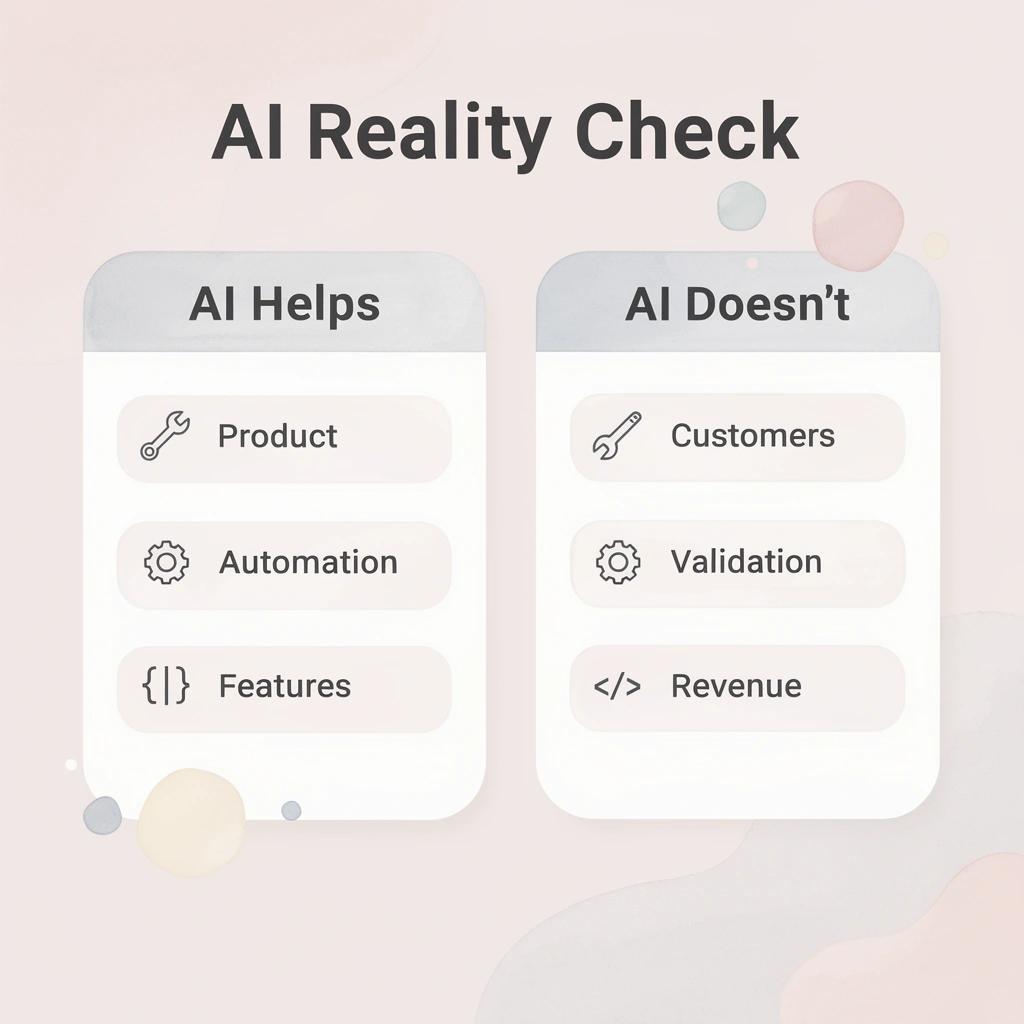
What AI Helps With
- Product creation
- Technical automation
- Code generation
- Feature building
What AI Doesn't Help With
- Customer acquisition
- Market validation
- Revenue generation
- Business strategy
Why do founders get stuck researching tools instead of building?
Founders spend weeks evaluating app builders, website generators, automation platforms, design tools, coding assistants, analytics dashboards, and customer support systems. The research feels productive because it's concrete and measurable: you can create spreadsheets, watch tutorials, and read comparison articles.
Does having more tools actually improve startup success rates?
But while you're researching, you're not launching. According to Qualtrics' 2025 research on AI adoption, 75% of organizations now use AI in some way. Yet startup success rates haven't improved. Having tools available doesn't guarantee good business results.
How does choice overload prevent founders from launching?
When there are dozens of categories and hundreds of tools within each category, the decision becomes paralyzing. Founders convince themselves they need the perfect set of tools before starting, treating tool selection as the main problem, when what separates successful launches from abandoned projects is doing the work.
What Actually Kills Startups
The data is clear: CB Insights found that 38% of startups run out of money, 35% build something nobody wants, 20% get outcompeted, and 19% operate unsustainable business models. These are strategic failures, not technical ones.
Why do founders focus on tools instead of validation?
You don't fail because you picked the wrong website builder. You fail because you didn't validate demand before building, ran out of money before finding product-market fit, or your unit economics don't work.
What work do most founders avoid doing?
Most founders focus on what feels easy: choosing tools. They avoid harder work like validating markets, attracting early customers, and building sustainable revenue. They stay in research mode, perfecting their stack instead of selling.
Why does building feel easier than selling?
Building something is satisfying. You can see progress, show screenshots to friends, and feel like an entrepreneur without facing the vulnerability of real customers who might say no.
But Polsia exists because tool selection was never the real challenge. Solo founders need systems that handle entire business operations so they can focus on strategy and growth.
What separates successful AI companies from the rest?
The companies that succeed with AI aren't using more tools than everyone else. They're using autonomous systems that execute while they sleep, turning AI from a productivity helper into complete business infrastructure.
The gap between having access to tools and running a profitable company is wider than marketing suggests. AI can help you build faster, but only disciplined execution builds businesses.
But knowing this doesn't solve the harder question: how do you choose systems that work?
Related Reading
What Makes a Great No-Code AI Tool?
A great no-code AI tool removes the biggest obstacle to making money. It's not the platform with the longest list of features: it's the one that eliminates friction at the exact point where your business would otherwise stall.
🎯 Key Point: The best no-code AI tools eliminate friction at critical business moments, not just offer impressive feature lists.

Most comparisons focus on features because they're easy to list. But features don't build businesses. Getting things done does. The question isn't whether a platform has AI capabilities, but whether those capabilities let you release faster, test sooner, or grow without rebuilding.
"Features don't build businesses. Getting things done does." — The fundamental truth about no-code tool selection

💡 Tip: When evaluating no-code AI platforms, ask yourself: "Does this tool help me ship faster?" rather than "How many features does it have?"
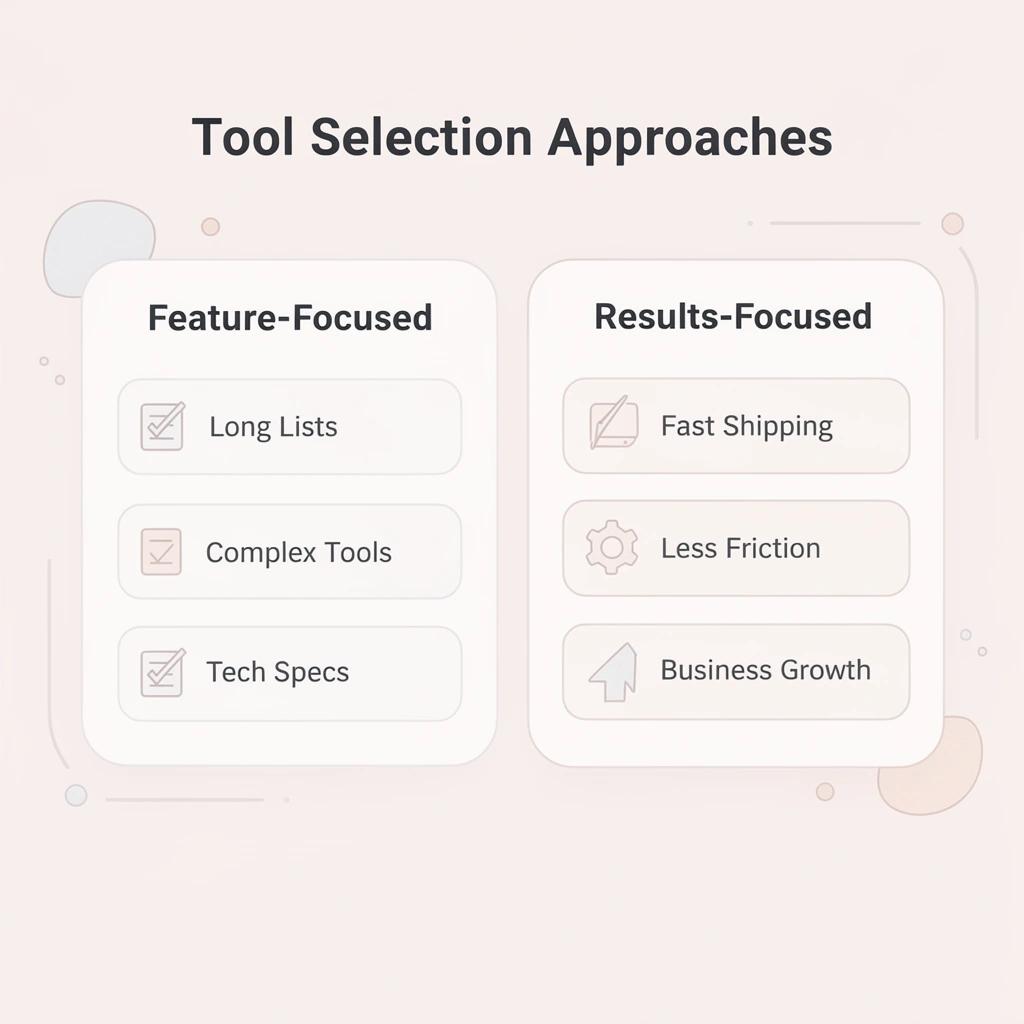
Feature-Focused Approach
- Long feature lists
- Complex capabilities
- Technical specs
Results-Focused Approach
- Faster releases
- Reduced friction
- Business growth
Ease of Use Without Sacrificing Power
The main advantage of no-code platforms is accessibility. If non-technical founders spend weeks learning the tool, that advantage disappears. The best platforms simplify workflows so you can focus on solving business problems rather than deciphering documentation. Every hour spent learning is an hour not spent talking to customers. How quickly you master the tool determines whether you launch this month or next quarter. Tools requiring extensive training create the problem they're meant to solve.
What's the difference between AI assistance and AI replacement?
Some AI tools create content, while others automate workflows or handle customer interactions. The difference between assistance and replacement is the difference between working faster and not working at all.
How do the most valuable AI capabilities eliminate bottlenecks entirely?
Greptile's State of AI Coding Report shows about a billion lines of code flow through their platform monthly. The most useful AI tools eliminate problems entirely: they write, test, and deploy code while you focus on customers, rather than simply accelerating your workflow.
Founders who use AI as an assistant get faster results. Founders who use AI as infrastructure get autonomous systems. That difference separates a productivity tool from a business model.
Speed to Launch Beats Perfection
Every week you spend building is a week without customer feedback. The faster you launch, the sooner you can test your ideas, identify problems, and improve your product. Strong no-code AI tools accelerate the path from idea to launch, letting you ship in days instead of months.
Most founders think they need to build more before launching and won't change much after. A faster learning cycle means spending less time planning and more time learning from real users.
What makes a platform truly scalable for growing businesses?
Many products work well for the first 100 users. Far fewer work well for the next 10,000. Consider whether a platform can support future growth without major migrations or rebuilds: handling larger user bases, adding new features easily, and expanding operations without excessive complexity.
Why does choosing the right platform save resources long-term?
A tool that scales well saves time and money later. The cost of switching platforms includes opportunity cost: every feature you didn't build because you were fixing infrastructure instead. Choose platforms that grow with your revenue, not against it.
Platforms like web app development company automatically manage roadmaps, ship code, and scale operations as demand increases. Our platform eliminates the traditional trade-off between speed and sustainability.
15 Best No-Code AI Tools in 2026
Today's no-code AI platforms let founders build applications, automate workflows, create websites, manage customer relationships, and run entire business operations without coding. The right tool depends on your specific needs.

Some platforms specialize in application development, others in automation, content creation, or comprehensive business operations. According to Gartner's 2024 forecast, low-code development technologies will exceed $30 billion in revenue, demonstrating how businesses now treat these platforms as alternatives to traditional development.
Here are 15 of the best no-code AI tools available in 2026, organized by use case.
"Low-code development technologies will exceed $30 billion, showing how seriously businesses now treat these platforms as alternatives to traditional development." — Gartner, 2024
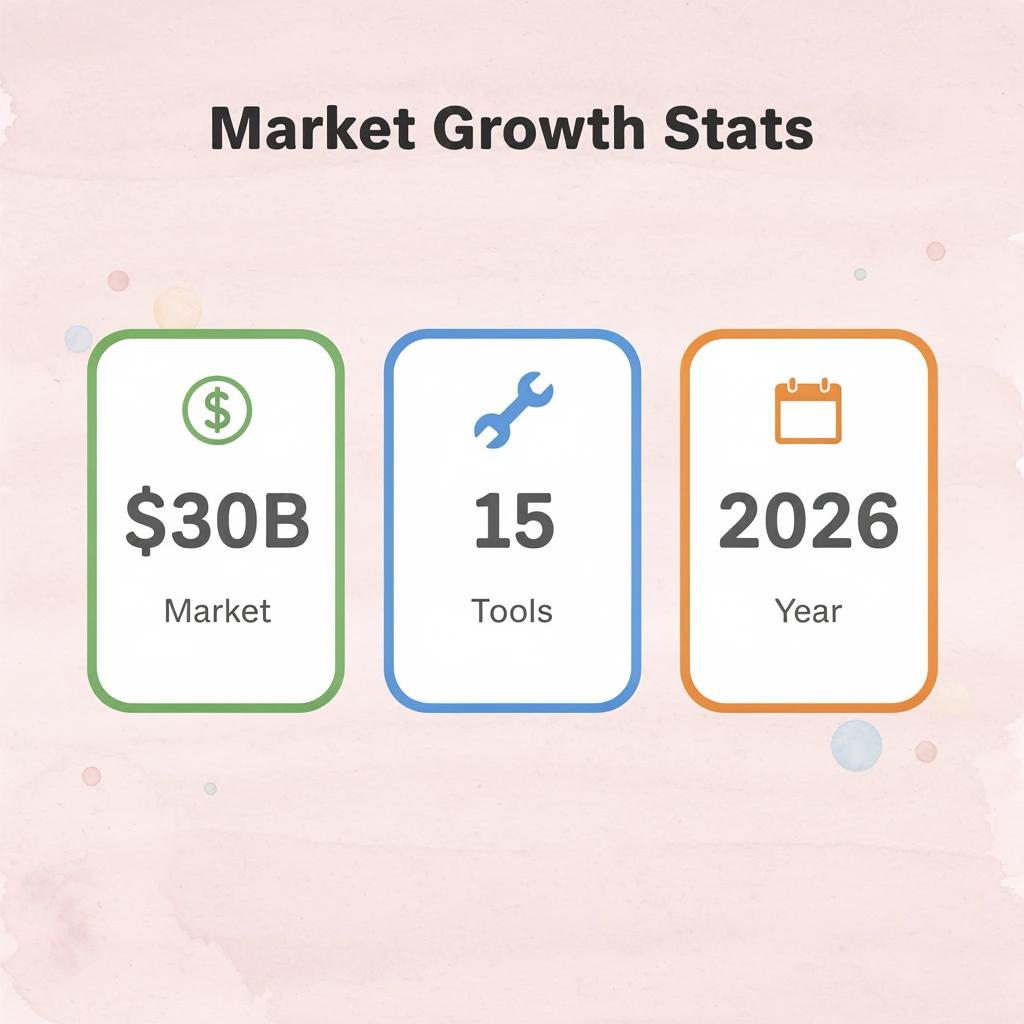
🔑 Takeaway: The $30 billion market size proves that no-code AI tools have moved from experimental solutions to mission-critical business infrastructure that can completely replace traditional development for many use cases.
💡 Tip: Choose your no-code AI platform based on your primary use case first — whether that's app development, workflow automation, or content creation — then expand to additional features as your needs grow.

1. Polsia

Best for
Running an entire business on your own with AI help
Polsia works as an AI co-founder, planning business strategy, developing products, launching marketing campaigns, managing customer communications, and handling ongoing operations.
Key features
Business planning, full-stack product development, AI-powered marketing, customer communication management, operational automation
Pros
Combines development, marketing, and operations on a single platform, eliminating the need for multiple tools and service providers. Designed for non-technical founders.
2. Bubble
Best for
Building complex web applications
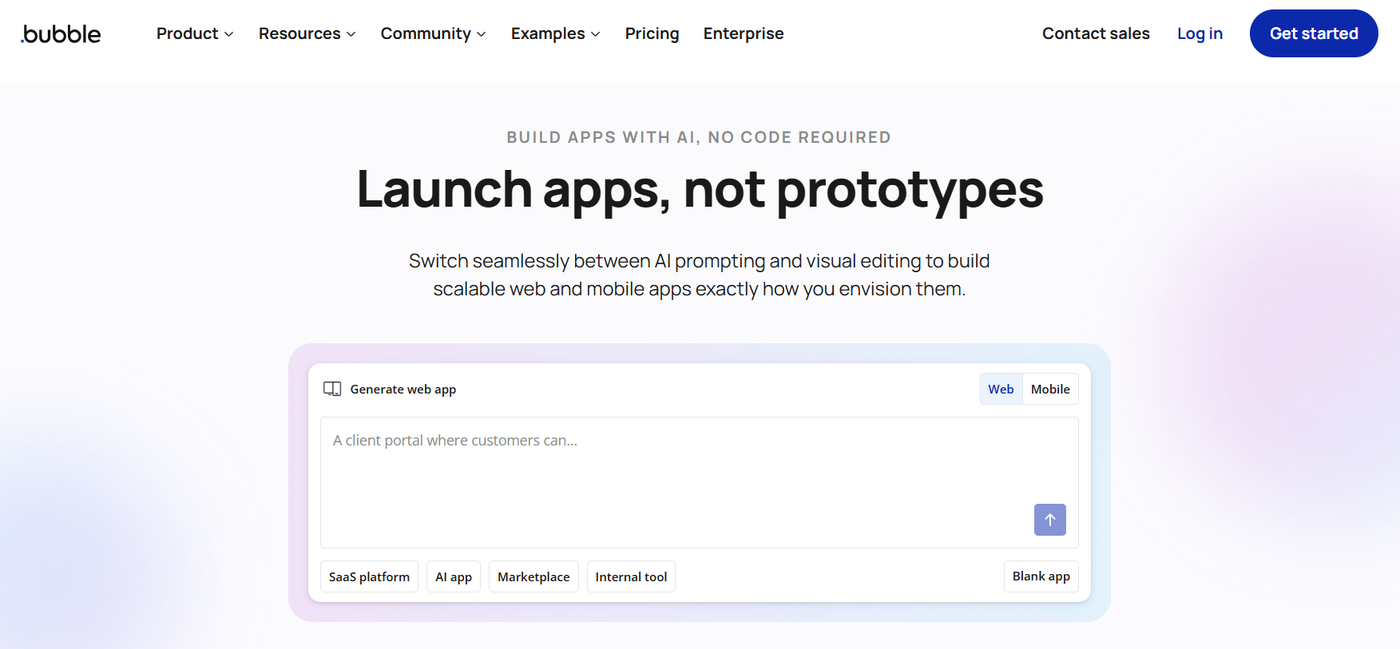
Bubble is a powerful no-code platform for creating sophisticated web applications. Its visual programming interface handles database management, user authentication, and workflow automation and integrates with an extensive plugin ecosystem.
Key features
Visual app builder, database management, workflow automation, extensive plugin ecosystem
Pros
Highly customizable with strong community support and capable of powering advanced, scalable applications
3. Lovable
Best for
AI-powered application generation
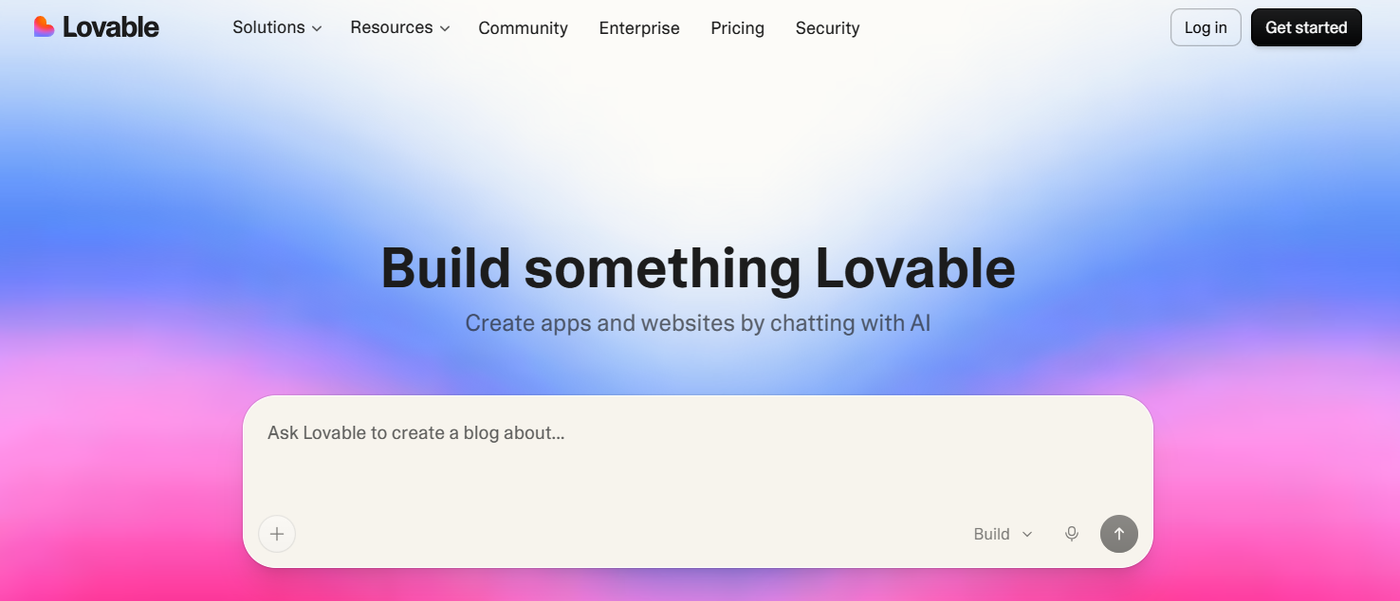
Lovable generates functional applications from natural-language prompts. Describe what you want to build, and the platform creates interfaces and logic in minutes.
Key features
Prompt-based app creation, AI-generated interfaces, rapid prototyping
Pros
Fast for MVP creation, beginner-friendly, reduces technical complexity
4. Bolt.new
Best for
Quick AI-assisted software development
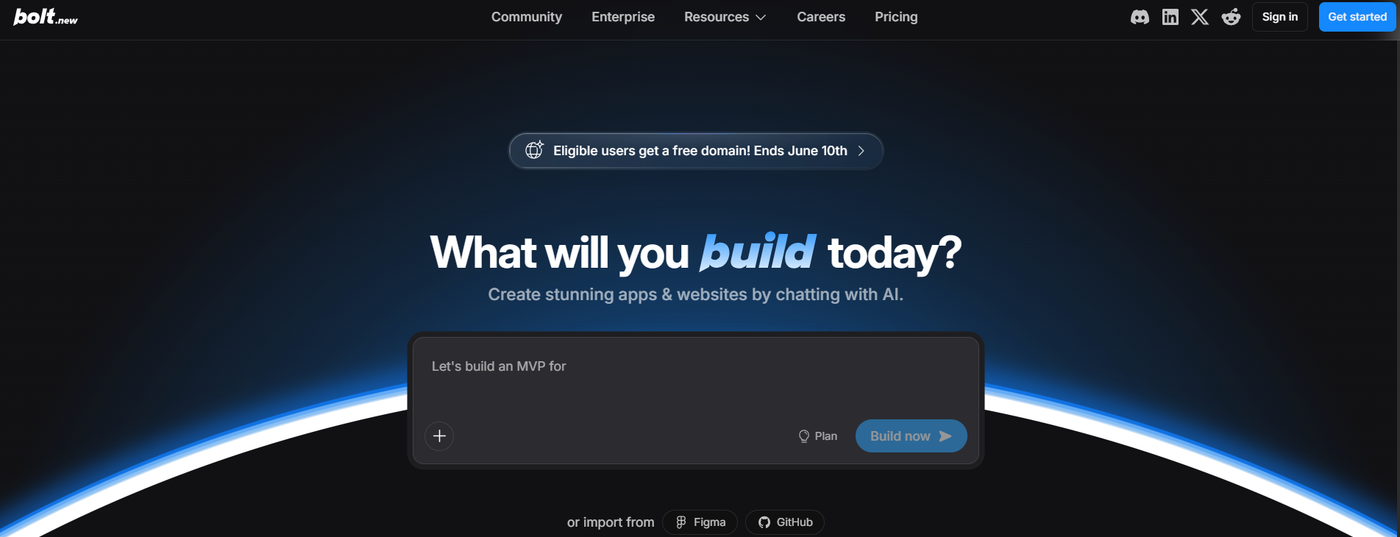
Bolt.new lets users build and modify applications through AI-driven conversations by describing changes in plain language.
Key features
Prompt-based coding, instant application generation, iterative development through conversation
Pros
Fast development cycles, strong AI assistance, useful for prototyping and experimentation
5. Softr
Best for
Internal tools and client portals
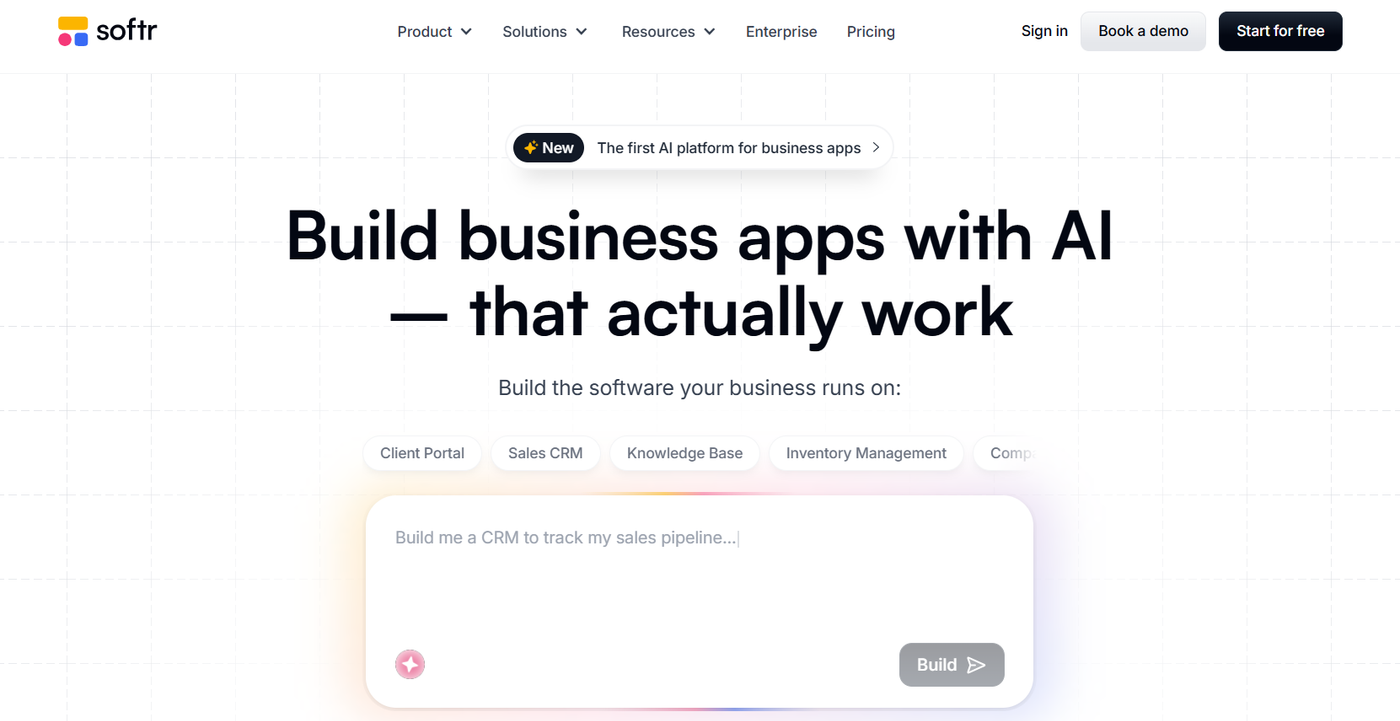
Softr builds business applications from existing data sources like Airtable or Google Sheets, enabling you to create dashboards, membership portals, and internal tools without starting from scratch.
Key features
Database integrations, membership portals, internal tools, customizable dashboards
Pros
Easy setup, excellent for operational workflows, minimal learning curve
6. Glide
Best for
Mobile apps built from existing data
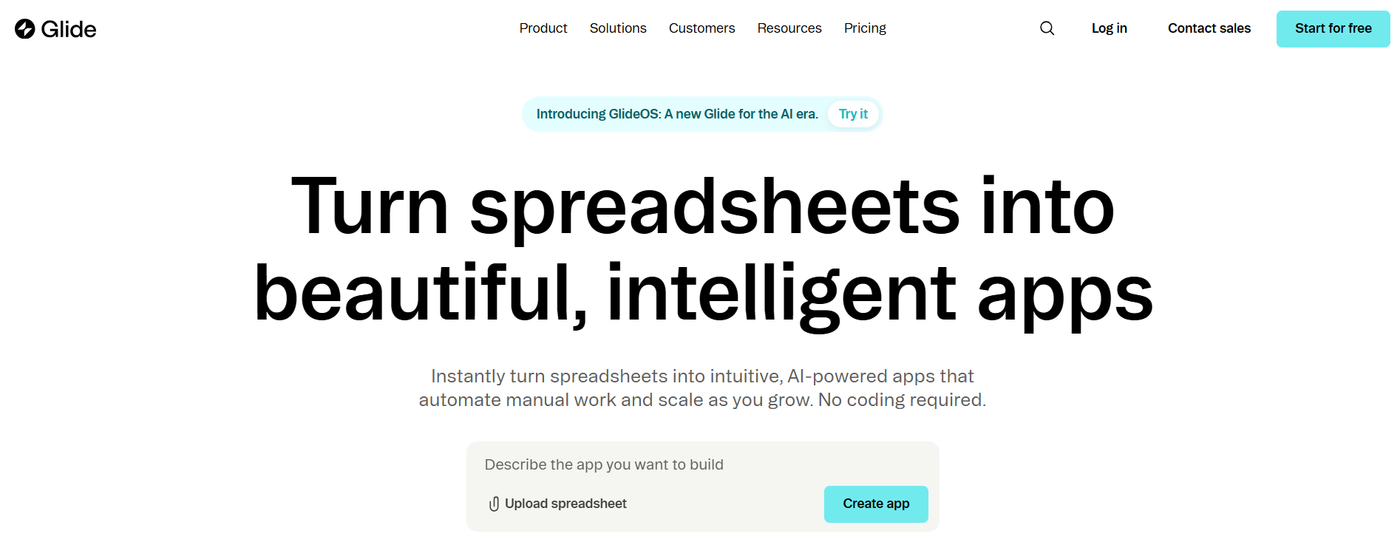
Glide turns spreadsheets and databases into mobile applications. If your data is in Google Sheets or Airtable, you can build a working app in hours.
Key features
Spreadsheet-powered applications, mobile-friendly design, workflow automation
Pros
Fast deployment, intuitive interface, ideal for business productivity apps
business productivity apps.
7. Replit
Best for
AI-assisted software creation
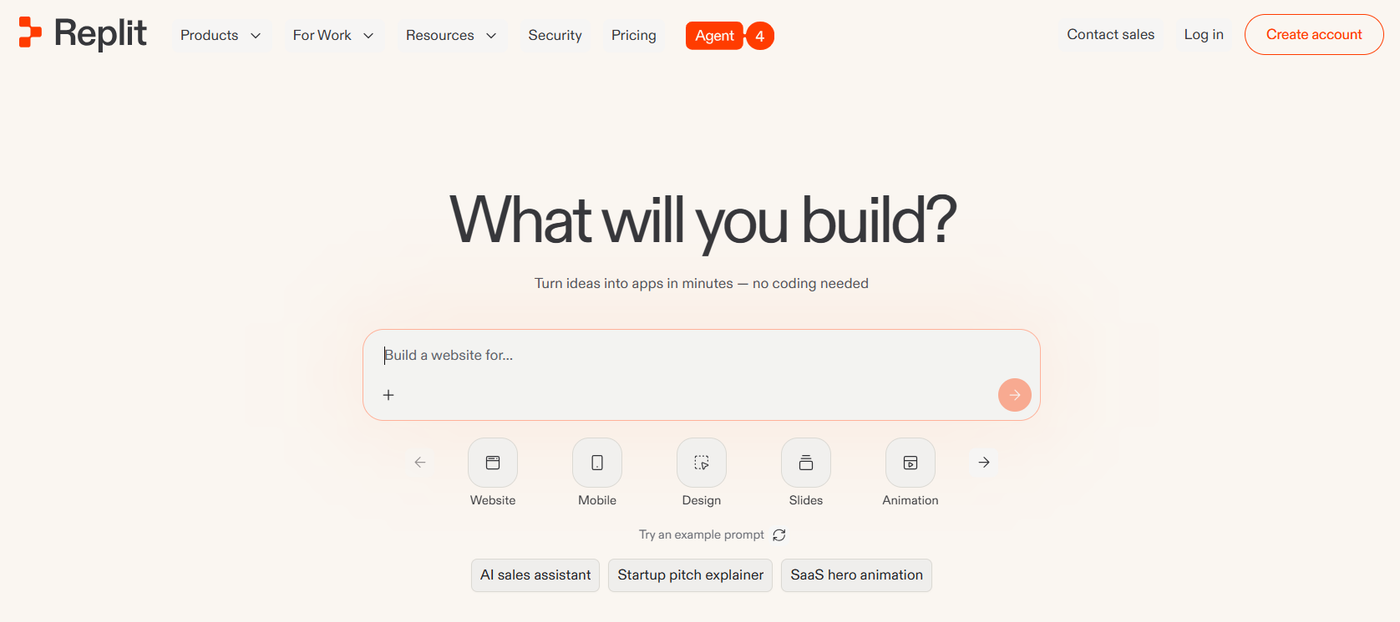
Replit brings together coding, deployment, and AI development support in a single cloud environment, serving both technical and non-technical users.
Key features
AI coding support, cloud development environment, instant deployment
Pros
Flexible, collaborative, and bridges the gap between no-code and traditional development
8. Webflow
Best for
Professional websites
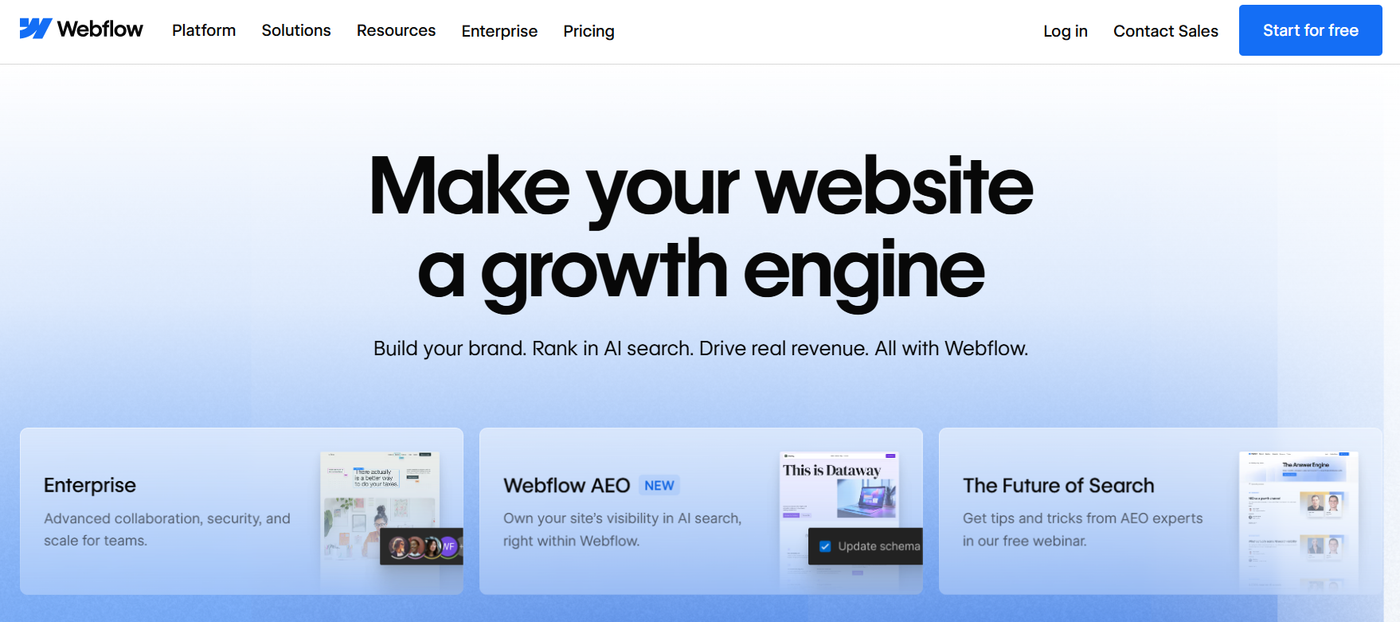
Webflow is a top platform for building highly customized websites without traditional coding. Its visual designer lets you control layout and styling with exact precision.
Key features
Visual website builder, CMS functionality, hosting, and advanced design controls
Pros
Exceptional design flexibility, scalable websites, strong SEO capabilities
9. Framer
Best for
Fast website creation
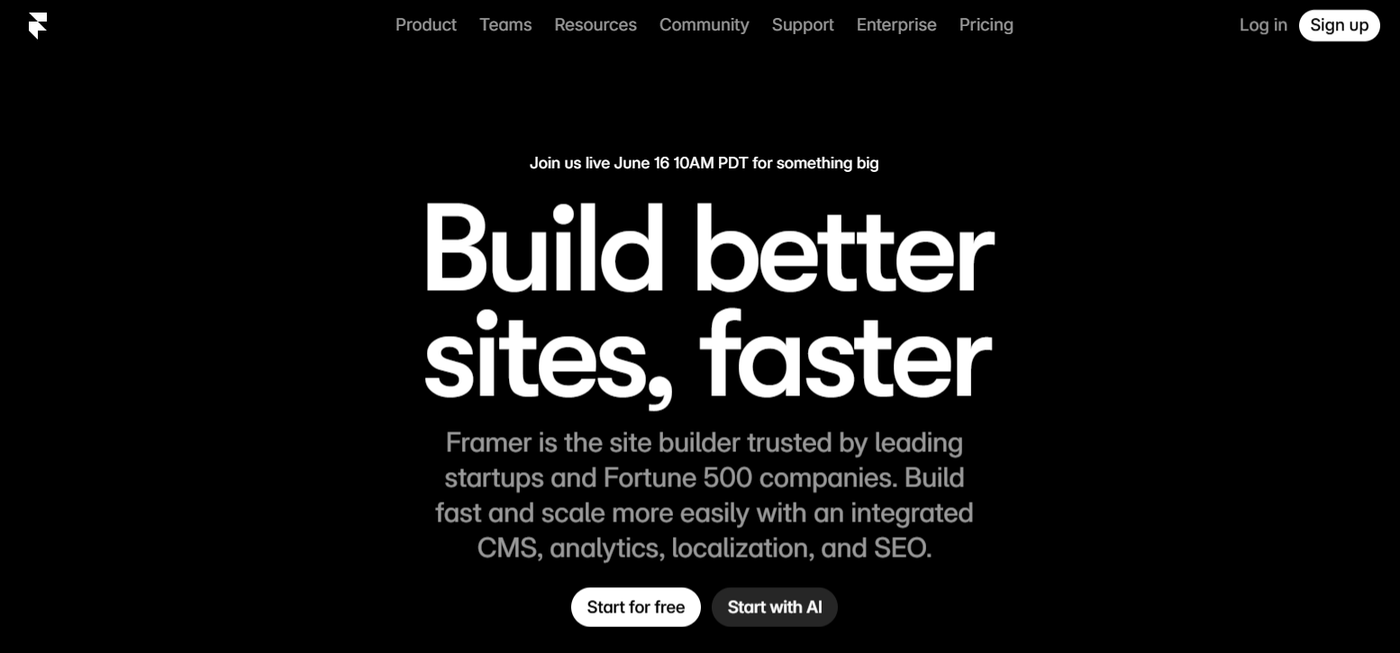
Framer combines AI-assisted design with website publishing tools. You can generate entire website layouts through prompts, then customize them visually before publishing.
Key features
AI website generation, responsive design, publishing tools
Pros
Fast setup, modern templates, excellent user experience
10. Zapier
Best for
Workflow automation
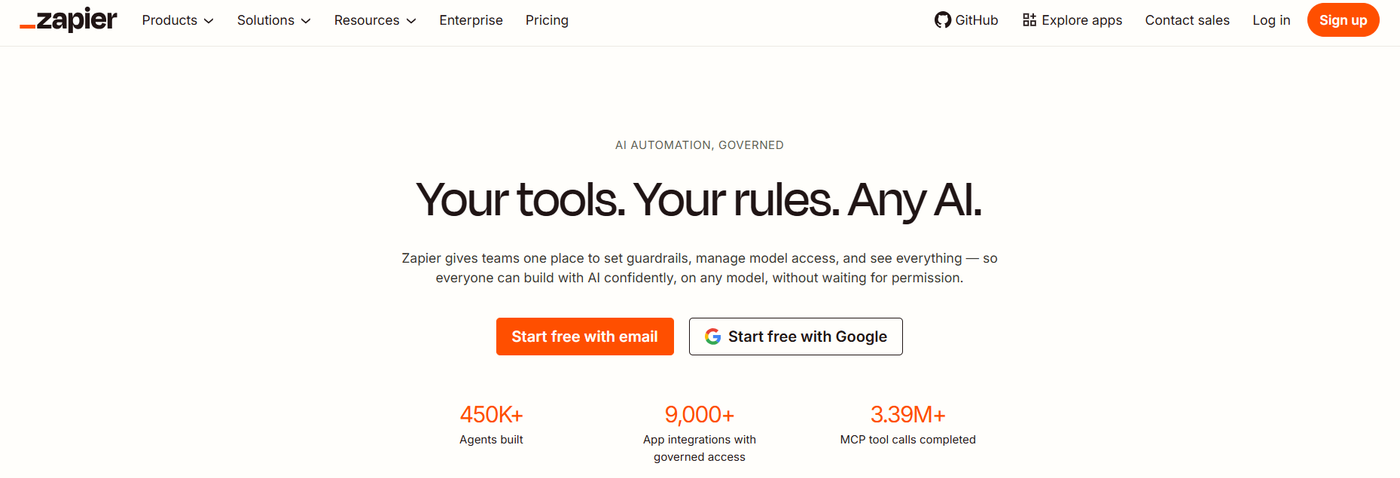
Zapier connects thousands of applications and automates repetitive tasks between them. When a trigger occurs in one app, Zapier automatically runs actions in other apps.
Key features
App integrations, workflow automation, AI-powered actions
Pros
Massive integration library, easy automation setup, significant time savings
11. Make
Best for
Advanced automation workflows
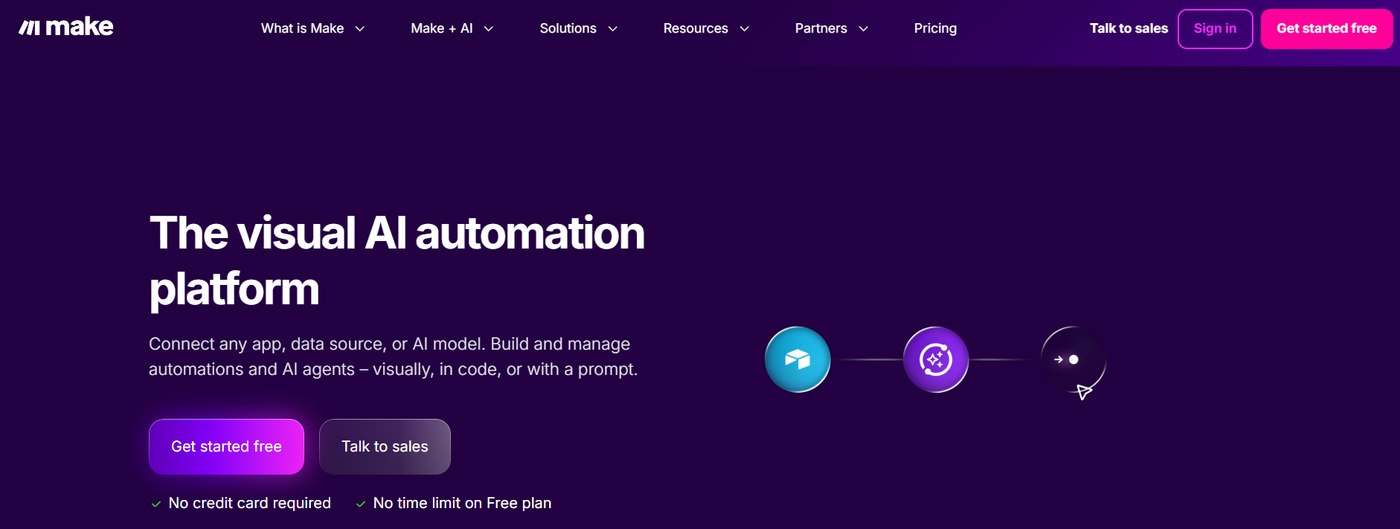
Make offers advanced automation for complex, multi-step workflows with conditional logic and data transformation.
Key features
Visual workflow builder, multi-step automations, extensive integrations.
Pros
Powerful customization, strong automation capabilities, and high scalability.
12. Airtable AI
Best for
AI-powered business operations
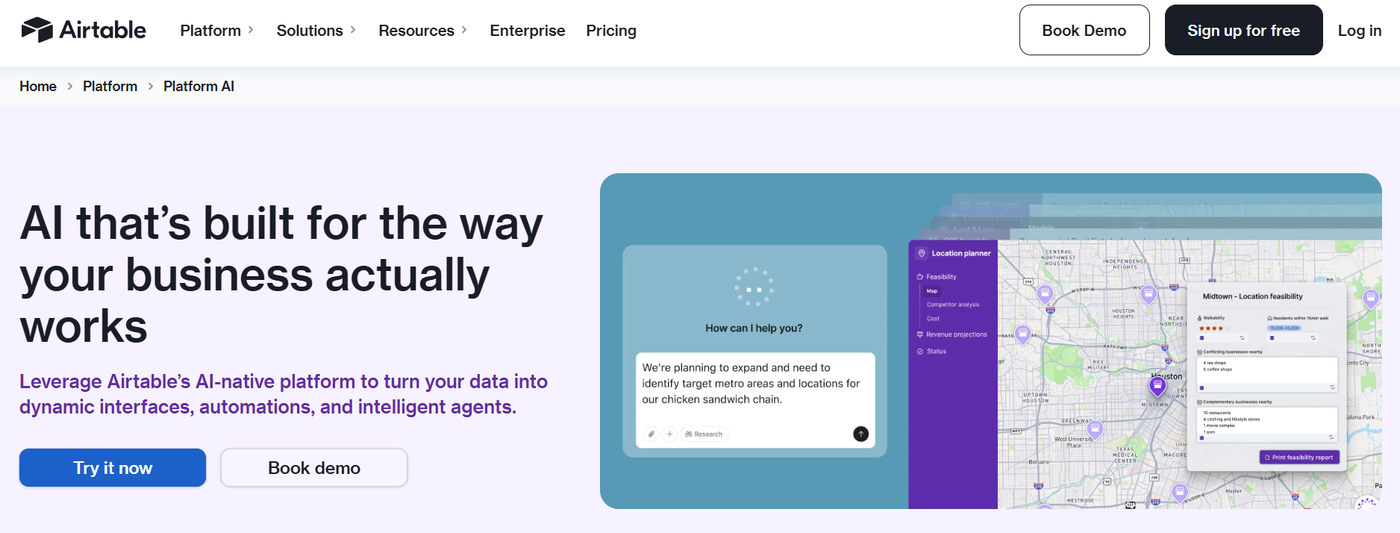
Airtable combines database functionality with AI tools to organize business processes, including project management, CRM, and content calendars.
Key features
AI-assisted data management, workflow tracking, automation
Pros
Flexible structure ideal for project management and operational workflows
13. Notion AI

Best for
Knowledge management and content creation
Notion AI helps you work faster through AI writing assistance, documentation, and project management. It serves as a central workspace for remote teams with robust collaboration features and straightforward setup.
Key features
AI writing assistance, documentation, project management
Pros
Strong collaboration features, versatile workspace, easy adoption
14. Adalo
Best for
Mobile application development
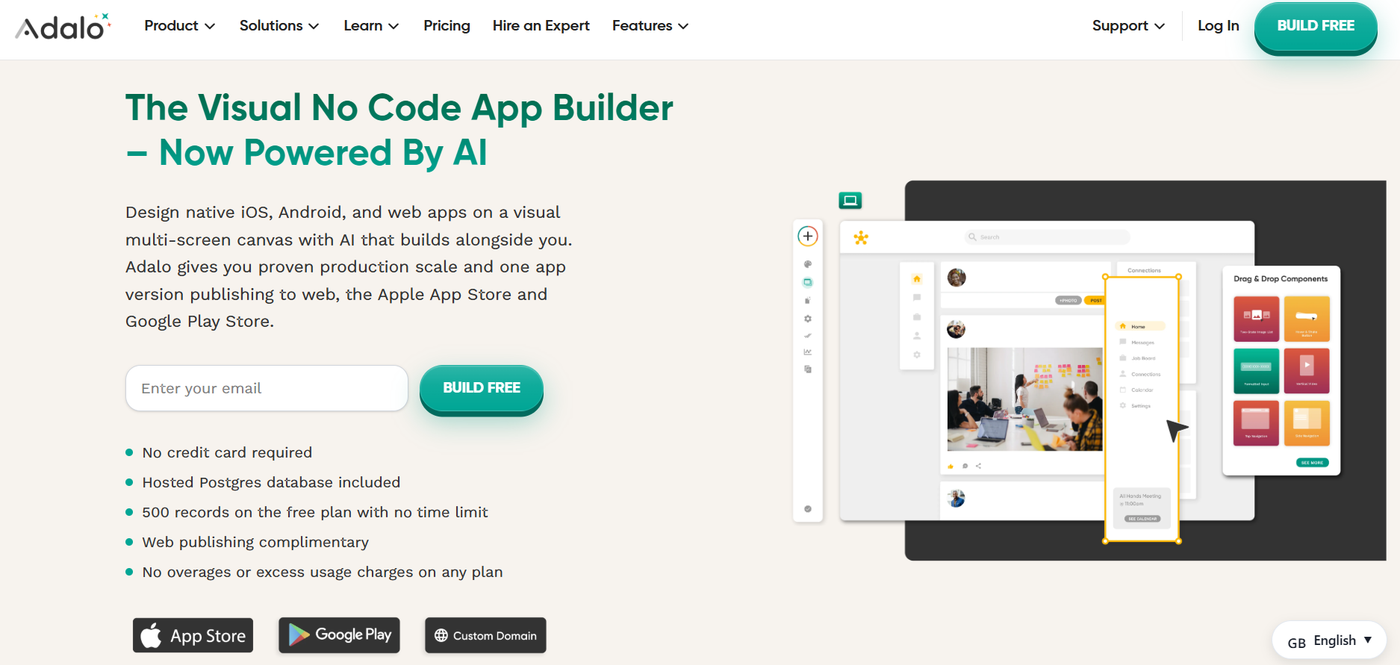
Adalo helps users build mobile apps for iOS and Android without development experience, handling deployment from a single build.
Key features
Mobile app builder, database functionality, app publishing tools
Pros
Beginner-friendly, mobile-focused, and a simple deployment process
15. Voiceflow
Best for
AI agents and conversational experiences
Voiceflow helps businesses create chatbots, voice assistants, and conversational AI systems with specialized conversational design tools, a strong visual builder, and enterprise-ready capabilities.
Key features
Conversational design tools, chatbot development, AI workflow management
Pros
Specialized for AI interactions, strong visual builder, enterprise-ready capabilities
What these tools actually solve
The most important difference isn't features: it's what problem you're solving. Some founders need to build an app quickly, while others need to automate workflows that consume hours each week. Some need a professional website; others need to manage knowledge across distributed teams.
How do you choose the right tool for your specific needs?
Founders focused on development might choose Bubble, Lovable, or Adalo. Those prioritizing automation might prefer Zapier or Make. Businesses needing content and knowledge management might lean toward Notion AI or Airtable AI.
What challenges emerge beyond just building software?
Many founders discover that building software is only part of the challenge. Launching requires marketing, scaling requires customer service, and growth requires sales. The traditional approach means assembling five or six specialized tools, each requiring setup, integration, and ongoing management.
Platforms like web app development company address the bigger challenge of running a business, not building software alone. Our platform automatically manages roadmaps, ships code, runs marketing campaigns, handles customer communications, and scales operations as demand increases.
The real question is whether you need a tool that helps you work faster or a system that works while you sleep.
The Biggest Mistake People Make With No-Code AI Tools
The biggest mistake is confusing product creation with business creation. No-code AI tools have made building software easy, but they haven't simplified finding customers, generating revenue, or sustaining operations. Founders often realize this only after launch, when the product is finished, but the business remains non-existent.

🚨 Warning: Building a product is just the beginning - the real challenge lies in customer acquisition, market validation, and sustainable revenue streams.
"The ease of product creation with no-code tools can create a dangerous illusion that business success will follow automatically." — Tech Industry Analysis, 2024

💡 Key Insight: No-code AI tools solve the technical barriers, but market research, customer discovery, and business model validation still require the same level of effort and expertise as traditional startups.
The validation gap
Most founders skip validation. They build because tools make building feel productive. Talking to customers, testing messaging, or confirming willingness to pay feels slower than watching an interface take shape.
CB Insights research found that 35% of startup failures stem from a lack of market need. These teams built products nobody wanted. The difference is validation, which must happen before development, not after.
The distribution problem
Building attracts attention from other builders. Selling requires reaching people who don't care about your tech stack. Many founders treat launch day as their marketing strategy: post an announcement, share on social platforms, then wait for customers to appear. That approach works for almost no one.
Real distribution means developing content strategies, paid acquisition channels, and partnerships through consistent outreach over months. It requires understanding where your customers spend their attention and earning space there. The product might launch over the weekend, but the distribution infrastructure takes considerably longer to build.
When operations overwhelm execution
Real users multiply the workload: questions need answers, payments require processing, bugs surface in production, and infrastructure needs monitoring.
Founders discover that maintenance, support, and iterative improvement consume far more time than initial development. Features reveal edge cases. Integrations break under load. Systems that ran autonomously for three users required constant attention at three hundred. Platforms like Polsia address this by handling ongoing operations autonomously (customer service, bug fixes, infrastructure monitoring) rather than assisting only with initial builds, but most founders using standard no-code tools become full-time operators of systems they thought were self-sufficient.
Why do most startups fail despite having the tools to build?
According to CB Insights' analysis, 38% of startups fail due to running out of money, while 20% face outcompetition and 19% cite broken business models. These failures share a pattern: the problem wasn't a lack of technical ability. Teams could build. They couldn't generate sustainable revenue fast enough to keep up with their resource consumption.
How has democratized development changed the competitive landscape?
No-code AI tools have democratised product development, intensifying competition as similar solutions launch simultaneously. With lower barriers to entry, execution speed, customer focus, and business model clarity now determine survival more than development skills.
A product can be built in days, but a business requires consistent execution across validation, marketing, sales, operations, and growth over months or years. The tools changed. The fundamentals didn't.
How to Choose the Right No-Code AI Tool for Your Goals
The right no-code AI tool removes your biggest bottleneck. If you can't ship code fast enough, you need a development platform. If you can't handle customer inquiries, you need an AI support system. If you can't keep up with content, you need an AI writing assistant. Start with the constraint costing you the most time or money, then find the tool to eliminate it.
🎯 Key Point: Your biggest operational bottleneck should drive your tool selection, not flashy features or marketing promises.

"73% of businesses report that identifying their primary constraint before selecting automation tools leads to 2x faster implementation and 40% better ROI." — McKinsey Digital Strategy Report, 2024
Your Bottleneck
Slow development
Recommended Tool Type
No-code development platform
Expected Impact
3-5x faster shipping
Customer support overload
Recommended Tool Type
AI support system
Expected Impact
60-80% reduction in response time
Content creation backlog
Recommended Tool Type
AI writing assistant
Expected Impact
10x more content output
Data analysis delays
Recommended Tool Type
AI analytics platform
Expected Impact
90% faster insights

⚠️ Warning: Choosing tools based on popularity rather than your specific constraints leads to wasted resources and delayed results. Always audit your workflow first.
Why do most founders choose the wrong tool?
Most founders compare feature lists across platforms and try to predict which tool will serve them best months down the line. That research takes weeks, while the actual business problem—slow development, poor customer response times, inconsistent content output—continues to waste time and opportunity.
Match the Tool to Your Immediate Business Constraint
When your main challenge is getting to market quickly, platforms like Lovable or Bolt.new can cut development time from months to days. When your main challenge is a lack of time (spending 60 hours weekly on non-revenue tasks), automation platforms like Zapier or Polsia become more useful. Our platform handles roadmap planning, code deployment, marketing execution, and customer service independently, which matters when you're running a business solo.
Pick based on what solves your specific problem, not what sounds cool. A tool with 500 integrations doesn't matter if you need only three. A platform that builds mobile apps won't help if your customers use desktop web browsers.
Evaluate Based on Execution Speed, Not Feature Depth
According to Airtable, understanding no-code AI tools takes about five minutes of reading, yet most founders spend weeks evaluating options. The platform with the longest feature list rarely wins; the one that gets you live fastest usually does.
When Scribe analyzed the landscape, they found 16 major platforms competing in overlapping categories. A founder who launches an imperfect product on Bubble this week will learn more about their market than someone still comparing Bubble versus Webflow versus Framer next month.
Prioritize Learning Over Permanence
No tool choice is permanent. You can move to different platforms later if needed. What you can't get back is time lost to overthinking your choice. The goal isn't to find the perfect tool—it's to find one good enough to test whether your business idea will work. If customers don't want what you're building, the platform becomes irrelevant. If they do, you'll have money to migrate to a different platform.
But choosing the tool is only half the equation. The harder part is what you do with it after the decision is made.
Related Reading
- Softr Alternatives
- Replit Alternatives
- Hire App Developer
- Appsheet Alternatives
- VS Code Alternatives
- Mobile App Ideas
How Polsia Helps Founders Build More Than Just Software
Most no-code AI tools solve one piece of the puzzle—building an app, automating a workflow, or generating content. Polsia addresses the full spectrum of what kills most startups: product development, business planning, customer acquisition, operations management, and sustainable scaling.

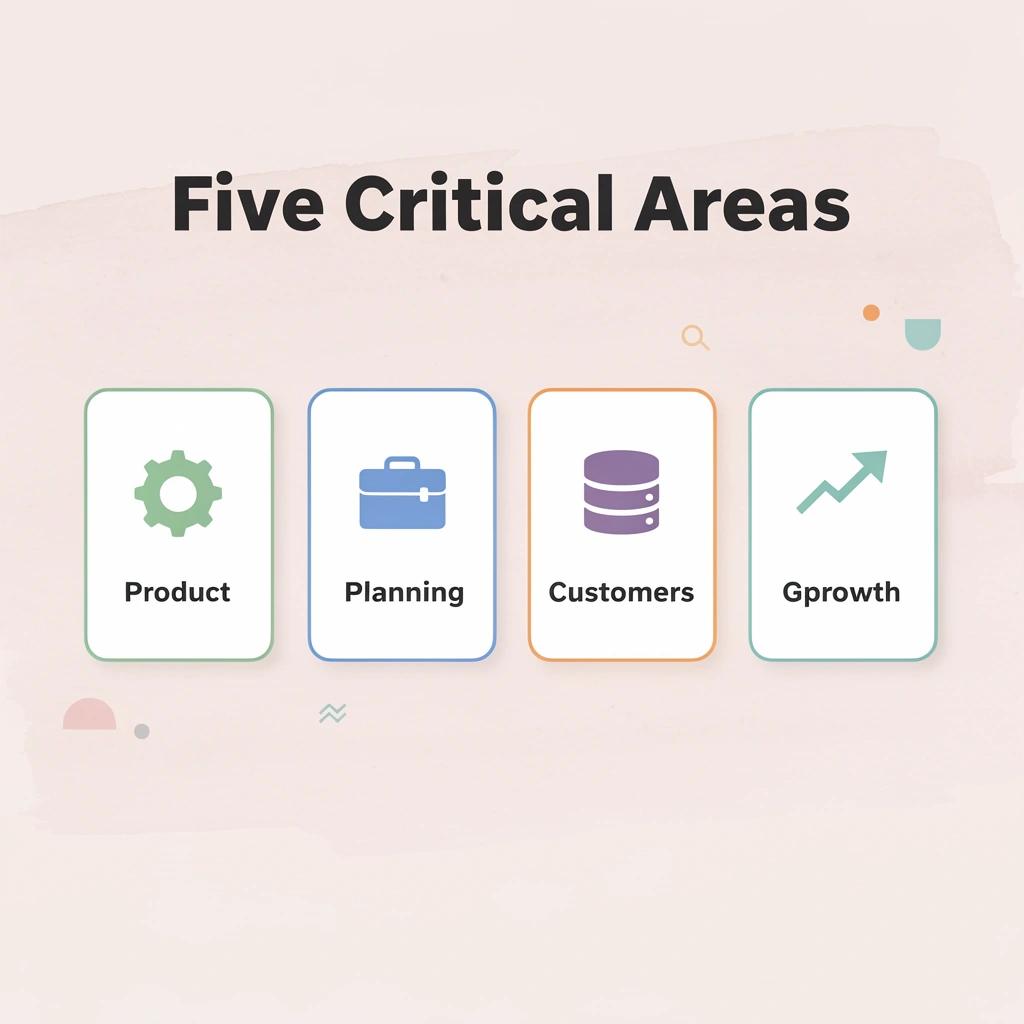
🎯 Key Point: While other platforms focus on individual tasks, Polsia provides an integrated ecosystem that tackles the five critical areas where 80% of startups fail—giving founders a comprehensive toolkit rather than fragmented solutions.
"95% of startups fail due to problems that could have been prevented with better planning, market understanding, and operational efficiency." — Startup Genome Report, 2023
💡 Tip: Think of Polsia as your all-in-one startup co-founder that never sleeps—handling strategic planning during the day and operational optimization at night, so you can focus on what truly matters: building relationships with your customers and iterating your product based on real feedback.
What happens after you ship?
The product launch is the start, not the finish. You need marketing campaigns that reach people, customer support that handles volume, infrastructure monitoring, and continuous feature development. Growth stops the moment you step away because there's only one of you.
How do solo founders overcome scaling challenges?
This is where most solo founders hit the wall: they cannot simultaneously run ads, respond to support tickets, improve conversion funnels, and plan the next feature. Traditional advice says to hire a team. According to Ben Cera's LinkedIn announcement, Polsia reached $30M raised at a $250M valuation while operating with one human and zero employees. This signals a major shift in what independent systems can handle.
The difference between assistance and replacement
Most AI tools help with tasks like code completion or drafting emails; you still review and refine. Polsia works independently: it plans roadmaps, ships code, launches campaigns across email and social, handles customer service, and manages sales conversations. These run continuously around the clock, creating leverage that changes what one person can build and scale.
Founders overwhelmed by everything beyond product development are describing the exact functions Polsia replaces, not supplements.
Why autonomy matters more than speed
Faster tools still need your attention. Autonomous systems don't. The main problem for most solo founders isn't tool speed—it's that there are only so many hours in a day, and your brain can only handle so much before decisions deteriorate.
How do autonomous platforms eliminate context switching?
Platforms like Polsia automate entire categories of work. Our platform keeps marketing campaigns running while you sleep and answers customer questions without requiring constant inbox monitoring.
Development work moves forward on features you planned without requiring you to code them yourself. This prevents constant switching between builder, marketer, support agent, and operator roles.
What matters most when you have autonomous leverage?
But having a system that runs your business autonomously only matters if you know what to do with that extra power.
Related Reading
- How To Create An App
- Best Vibe Coding Tools
- Lovable Ai
- Best Mobile App Builder
- Ai App Builders
- Hire App Developer
- Mobile App Ideas
Start or Grow your Existing Business with Polsia Today
The advantage of autonomous systems only works if you know what to build with them. Most founders spend freed time adding features or chasing vanity metrics instead of asking what creates real value. The question isn't whether you can automate your operations—it's whether you're ready to use that autonomy to build something that truly matters.
🎯 Key Point: Automation without strategic direction is expensive busy work. Real value comes from using freed time to focus on high-impact decisions.

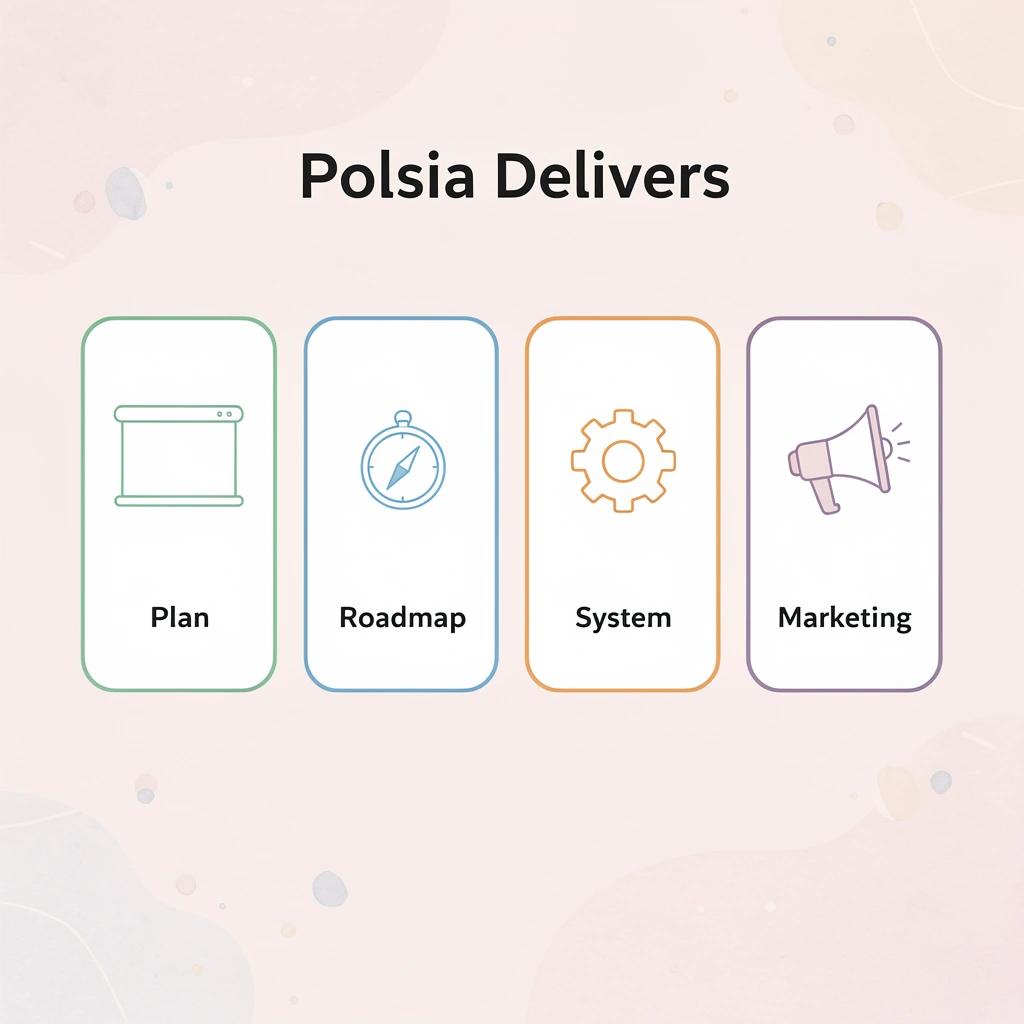
Polsia starts at $49 per month and delivers more than code. In your first session, you'll receive a structured business plan, a roadmap connecting product development to customer acquisition, and a system that handles marketing and operations while you focus on decisions only you can make.
"The most successful entrepreneurs don't just automate tasks—they automate everything that doesn't require their unique judgment, then double down on strategic decisions." — Business Automation Research, 2024
💡 Tip: Your first month with Polsia should focus on identifying which decisions require your personal attention versus which processes can run autonomously.
The founders who win with no-code AI tools recognize that autonomy creates space for strategy, and strategy determines survival. Start with a system that eliminates work that doesn't require your judgment, then use what you learn to build the business you actually want to run.
Traditional Approach
- Manual operations consume 60-80% of time
- Reactive decision-making based on urgency
- Founder bottleneck limits growth
Polsia-Powered Approach
- Automated systems handle routine tasks
- Strategic planning drives daily priorities
- Scalable processes enable expansion
✅ Best Practice: Use your first 30 days with Polsia to document which decisions you're making repeatedly—these are prime candidates for automation or systematic handling.